
Famous sights nearby
1
Picked from Tokyo's official visitor guide — a short walk or direct exit from this stop.
Kabukiza歌舞伎座
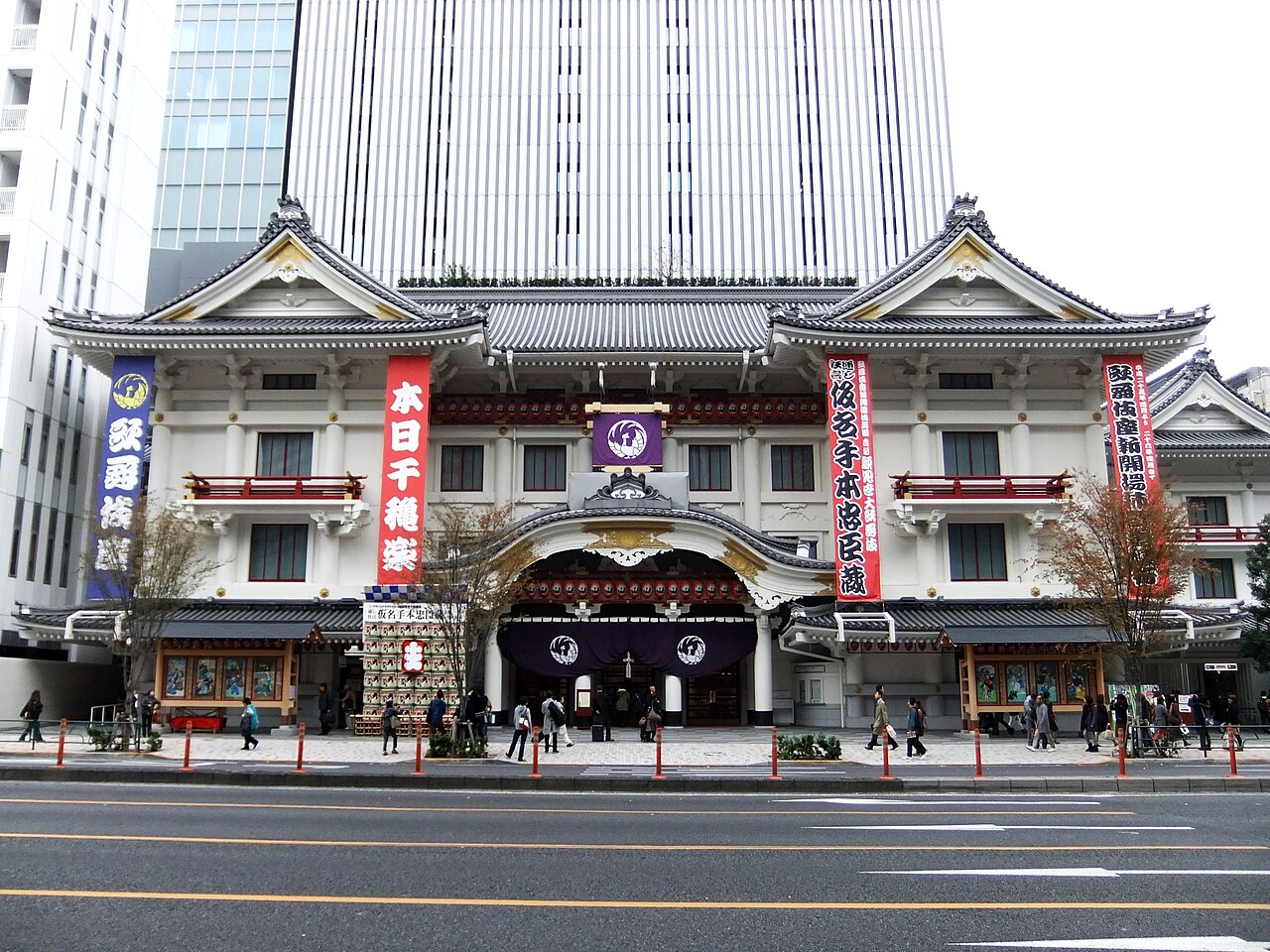
The world’s only dedicated kabuki theatre — single-act tickets let you sample an hour.
≈2 min walkGinza 4, Ginza, Chuo, TokyoSee on map →
Your lines here
This stop carries one number per line. The one on your sign depends on which platform you came up from.
- H10
- A11
Worth a stop nearby
Featured stops a few stations from here — same train, no change.
- H-09Ginza銀座Luxury flagships · Depachika1 stoptoward Naka-meguro
- H-11Tsukiji築地Outer market · Street food1 stoptoward Kita-senju
- A-10Shimbashi新橋Salaryman izakaya · Yurikamome1 stoptoward Nishi-magome
- H-08Hibiya日比谷Imperial gardens · Theatres2 stopstoward Naka-meguro
- A-09Daimon大門Zojoji · Tokyo Tower gate2 stopstoward Nishi-magome
Exits
Street exits by their posted numbers. Marked exits have a step-free entrance.
- 3
- 3b
- A1
- A2
- A7
- A8
Step-free access
AAsakusa LineSide platforms
Step-free routeElevatorEscalator · some stairsAccessible toilet
Accessible toilets
- B1FWheelchair-accessible · Ostomate · Baby change
City buses
Toei buses from stops a short walk away. The code on each chip is what the front of the bus shows.
Ginza-Yonchōme (Ginza 4)銀座四丁目~100 m
- 業10→ Shimbashi
- 業10→ Tokyo Skytree Sta.
- 都03→ Harumi-Gochōme-Terminal (Harumi 5 Terminal)
- 都03→ Yotsuya Sta.
- 都04→ Tokyo Sta. Marunouchi-Minamiguchi (Marunouchi South Exit)
- 都04→ Toyomi-Suisan-Futō
- 都05-1→ Harumi-Futō
- 都05-1→ Tokyo Sta. Marunouchi-Minamiguchi (Marunouchi South Exit)
- 都05-2→ Ariake Garden
- 都05-2→ Tokyo Big Sight
- 都05-2→ Tokyo Sta. Marunouchi-Minamiguchi (Marunouchi South Exit)
Flat ¥210 a ride in the 23 wards — board at the front, pay as you get on, IC card or cash.
Three or more rides in a day? The ¥500 one-day Toei bus pass pays for itself — sold on board.
First and last train
Departures from this station. A time after midnight belongs to the night before — 00:20 means tonight, not tomorrow morning.
H-10Hibiya Line
Kita-senju
Every day05:06–00:07
Naka-meguro
Every day05:04–00:16
A-11Asakusa Line
Northbound
Every day05:08–00:11
Southboundtoward Nishi-magomelast train ends at Sengakuji
Every day05:16–00:21
Kabukiza Theatre, in the government's words
Quoted verbatim from the Japan Tourism Agency's commentary database. None of it is ours, and none of it has been edited — the licence asks that it not be. Written in 2018.
A distinguished landmark in Ginza, the storied Kabukiza Theatre is a Tokyo institution. Opened in 1889, it is the largest kabuki theater in Japan and the only one that’s fully dedicated to the kabuki tradition. This majestic building has gone through several transformations, the latest of which, completed in 2013, saw a makeover by renowned Japanese architect Kuma Kengo. Architecturally, it is an icon, showcasing the building styles from two distinctive periods in Japanese history, namely Nara (600–794) and Momoyama (late sixteenth century).
Read the rest — 2 more paragraphs
It is safe to say that Kabukiza Theatre is the most significant building in the kabuki world. The regal, expansive theater is adorned with classic Japanese motifs and designs. There are regular seats spread out over three floors, along with box seats, plus a fourth floor reserved for those watching just a single act at a discounted price. Kabukiza Theatre has also made it easier for non-Japanese speakers to enjoy the show by renting out a translation device that provides commentary, background, and plot explanation in English.
However, Kabukiza Theatre is more than just a show venue. There is a restaurant on-site serving meals during intermission (reservations required), and for visitors who are not catching a performance, they can still shop for kabuki-related souvenirs and memorabilia on the second basement floor as well as the fifth floor of the adjacent Kabuki Tower. Moreover, there’s the interactive Kabukiza Gallery featuring sets, costumes, and props that visitors can touch and play with. Just outside the gallery is the scenic rooftop garden, which looks out to the modern skyline of Ginza
This English-language text was created by the Japan Tourism Agency.
Not here yet
Which car to board still isn't here — it exists as posters on the platform and in no open dataset at all. Live service status covers the four Toei lines only, on their line pages: Tokyo Metro's realtime feed is licensed in a way this site can't carry.